
The production of gas filter cartridges has long faced challenges such as uneven carbon distribution during manual assembly, dust spillage, positioning deviations, and low efficiency. These seemingly minor issues directly affect product quality and compliance with export standards.
Today, let's take a look at how HBC's canister production line addresses these key challenges.
The internal structure of the gas filter cartridge
Common shapes of gas filter cartridges
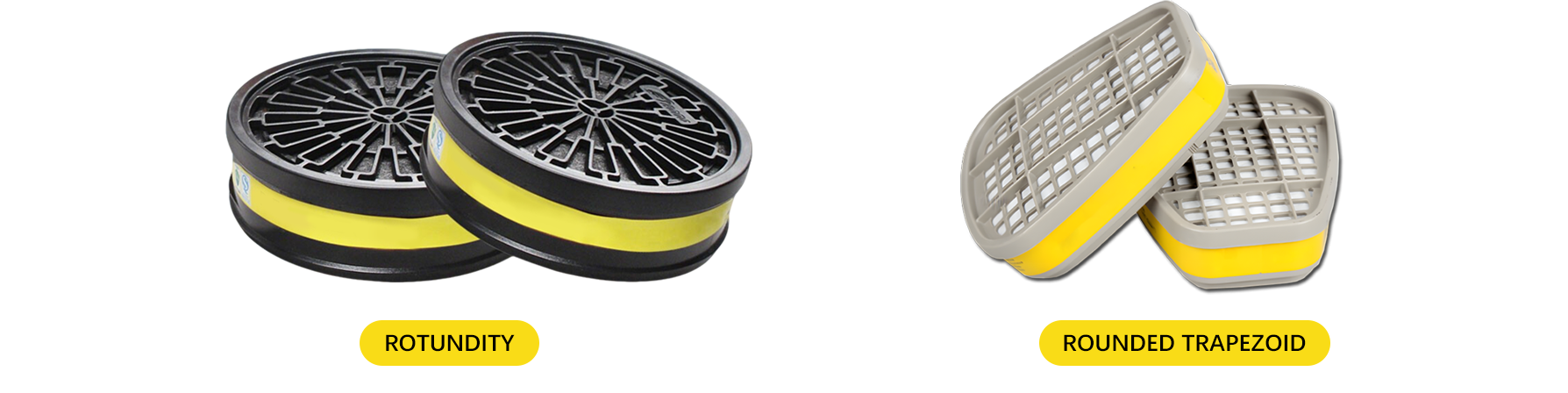
A qualified gas filter cartridge typically comprises, from the inside out
Shell (upper cover + bottom box): plastic injection molded parts, requiring dimensional stability and good sealing
Filter cotton layer: placed on the air inlet side to intercept large particles of dust
Activated carbon packing layer: the core adsorption layer, typically made of coal-based carbon, coconut shell carbon, or impregnated carbon
Sealing gasket/welding rib: Ensure that the air tightness meets the standard after the upper and lower covers are fused
Inadequate precision in any aspect will lead to a decrease in adsorption efficiency or excessive respiratory resistance, and may even prevent the product from passing export certification.
Technical difficulties in the carbon impregnation process
Difficulties encountered in automation
Activated carbon filling is the most crucial step in the production of gas filter cartridges, and it is also the process most prone to issues in automation.
Difficulty 1:
Differences in fluidity among different carbon species and particle sizes:
The particle morphology, bulk density, and flow angle of coal-based carbon, coconut shell carbon, and impregnated carbon differ from each other. If carbon is poured by weight, it can lead to volume deviations, affecting the thickness of the adsorption layer.
HBC solution: Utilizing a "volume measurement method", the carbon content is adjustable and unaffected by the type and mesh number of carbon, ensuring consistent filling volume per box.
Difficulty 2:
Two carbon injection requirements.
Some high-end gas filter cartridges require a layered filling process, where one type of carbon (such as impregnated carbon) is filled first, followed by another type (such as ordinary activated carbon).
HBC scheme: The carbon dosing device supports two independent carbon dosing operations, with the carbon quantity for each operation independently adjustable. It is servo-controlled, ensuring that the metering error is controlled within ±2g.
Difficulty 3:
Spillage of carbon dust.
During the carbon filling process using traditional equipment, carbon powder flies around, not only polluting the machine but also adhering to the outer walls of the box, resulting in weak labeling and dirty appearance in subsequent steps.
HBC solution: The carbon filling nozzle fits tightly with the box, ensuring no carbon spillage. The machine and the surrounding area of the box are kept clean, and the labeling process is not affected by dust falling off.
Difficulty 4:
Rotating table positioning error.
Many manufacturers use a rotary table structure driven by a splitter. Over long-term operation, the mechanical clearance increases, leading to misalignment between the box and the carbon filling nozzle, resulting in carbon leakage and uneven carbon distribution.
HBC scheme: Fixed point positioning is adopted, ensuring precise positioning of each box when it reaches the carbon filling station, eliminating cumulative gap errors and preventing carbon leakage.
Multiple flexible solutions for canister manufacturing machines
In response to varying production capacity needs, HBC has launched four types of equipment, covering everything from single-station manual feeding to fully automated unmanned production:
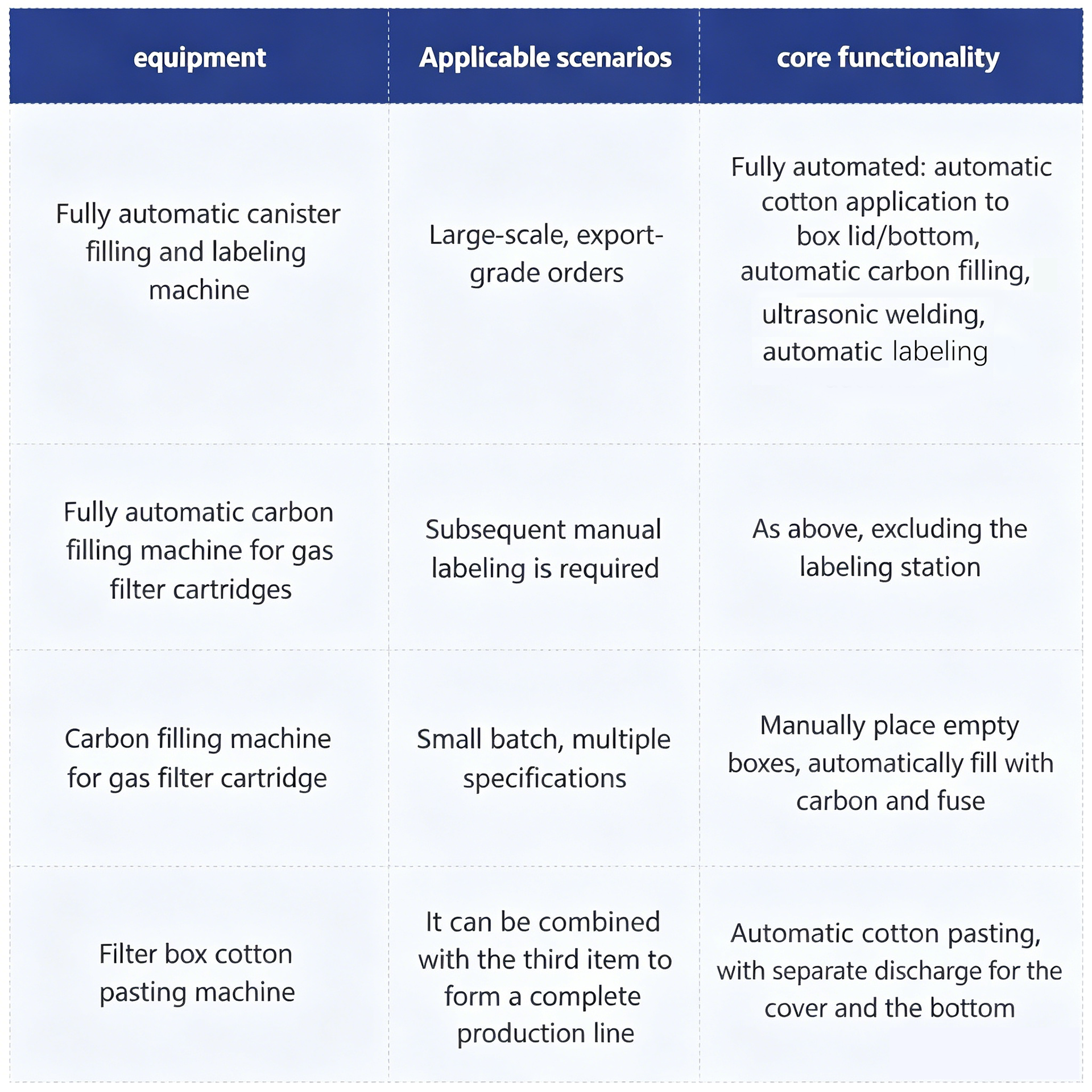
he actual testing efficiency of the fully automatic carbon filling machine + labeling machine reaches 20 pcs/min, while the common equipment on the market generally operates at around 13 pcs/min, representing a productivity increase of over 50%. From cotton attaching, two rounds of carbon filling, welding, labeling to inspection, the entire process requires no manual intervention, providing reliable production support for filter cartridge manufacturers.
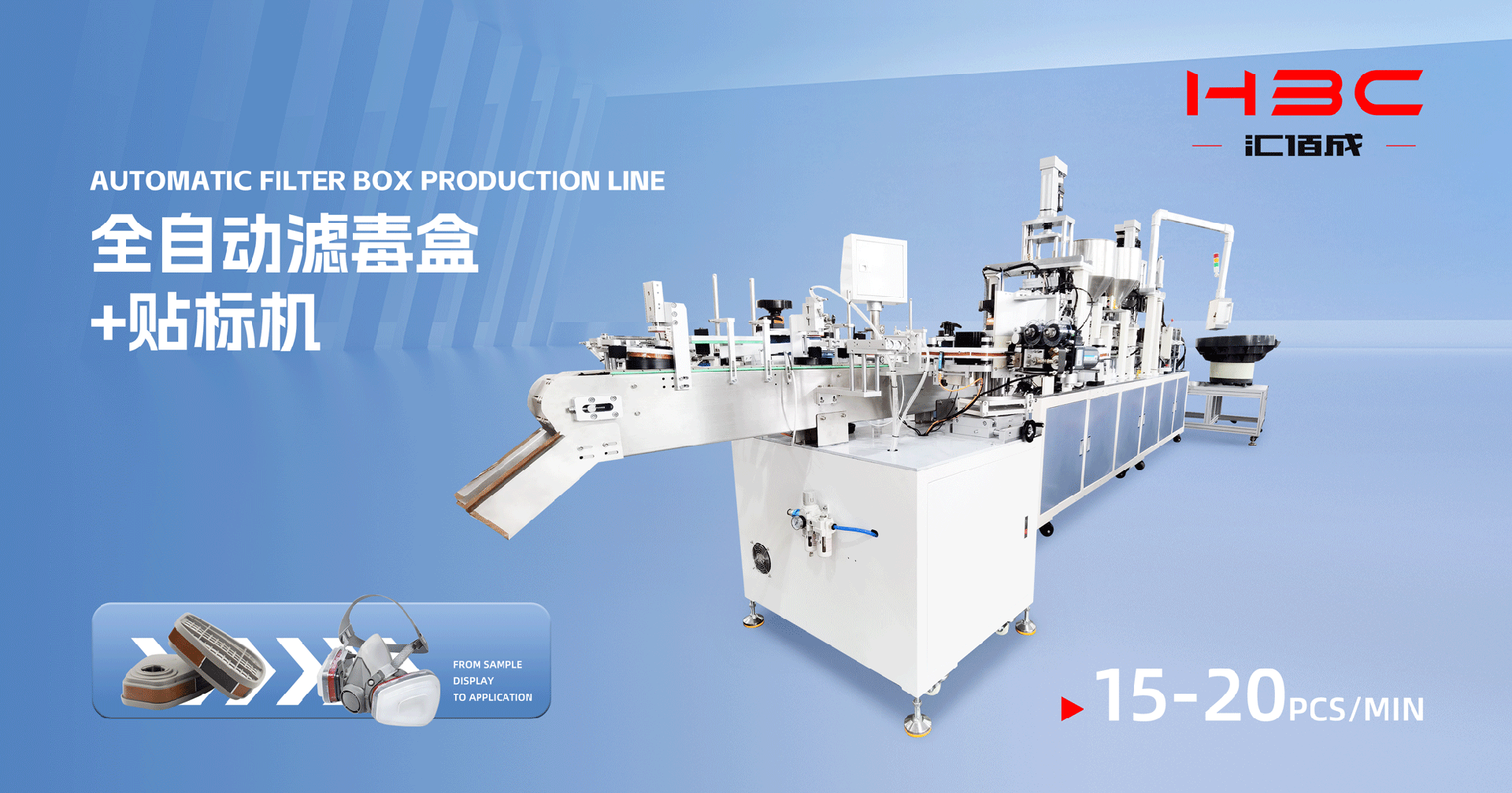
If you are struggling with the production capacity or quality issues of your gas filter cartridges, feel free to contact us for a more detailed automation solution.
END